
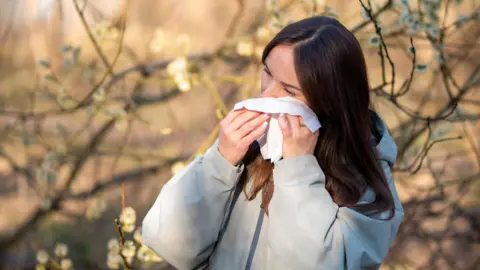
Hay fever sufferers must now put up with symptoms for up to two weeks longer than they would have done in the 1990s, according to a major review.
A new report by 65 scientists from around the world found that climate change has "prolonged the pollen season".
The fine powder released by certain grasses, trees and plants can cause chaos for those who are allergic, with itchy eyes, sneezing and headaches all common symptoms.
So what does this mean for millions of people living with hay fever, and is there anything they can do to cope?
The new report, published in the journal Lancet Public Health, says climate change is extending the flowering season of some plants.
It looked at three trees common in Europe - birch, alder and olive - and found pollination started one to two weeks earlier between 2015 and 2024, compared with 1991 to 2000.
"We are seeing a prolonged season – an earlier onset of pollination in both the north and south [of Europe]", says Professor Joacim Rocklov, from the University of Heidelberg, one of the authors of the paper.
He told the Today Programme on BBC Radio 4 that more research is needed to see if climate change could also be increasing the amount of pollen circulating and making hay fever symptoms more severe.
Early summer is often peak pollen season, when the number of grains of pollen in the air multiplies.
The warm weather seen in the UK over the last two years means conditions have been ideal for birch tree pollen - a major hay fever trigger.
Warm, dry days help spread pollen through the air, creating what's been dubbed a "pollen bomb".
Any extension of the pollen season could have an impact on millions of people across the UK.
"While for some their symptoms can be mild, for many their hay fever symptoms impacts their quality of life," says Anne Biggs, deputy head of clinical services at Allergy UK.
"It can mean missed days at work, poor sleep and, for some teenagers and young people, active hay fever symptoms can mean they drop an academic grade in their exams."
Pollen can also trigger asthma attacks and allergic reactions in people living with other respiratory conditions.